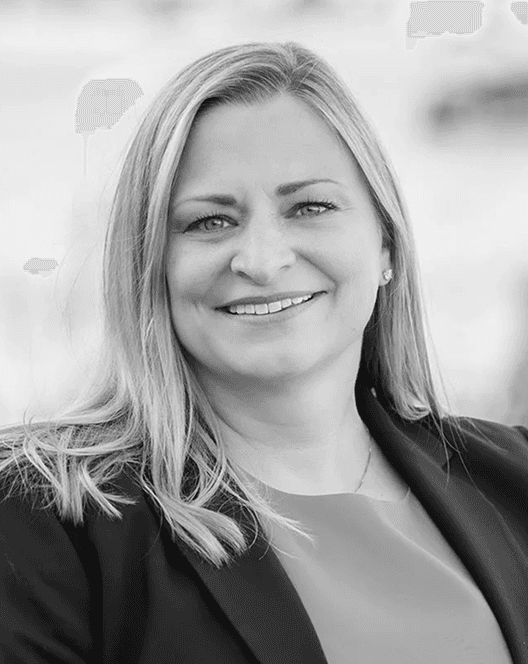
Anthony Santaro
Interviews
·
Building the Voice Layer for Revenue Teams

This week, Thoughtly announced a $5.5M Seed round (bringing total funding to over $8 million) to build omnichannel AI agents for revenue teams. The round was led by Armory Square Ventures, with participation from nvp capital, Converge, K5 Global Tokyo Black, and returning investors Afore Capital and Greycroft. The raise coincides with the launch of Thoughtly’s omnichannel platform, expanding beyond voice to include SMS and email, enabling revenue teams to reach every lead, on every channel, from a single CRM-native system.
Our VP Anthony Santaro sat down with co-founder and CEO Torrey Leonard at Thoughtly’s Chelsea, New York office to learn how a Discord experiment became one of voice AI’s most promising companies. You can listen to the full conversation here, or read on for an abridged version.
Anthony Santaro: Take us back to the beginning. What sparked the idea for Thoughtly?
Torrey Leonard: I was head of product at Affinity Finance when I started playing with GPT-3. I thought, this language model talks like a person, so why isn’t there a way to give it a voice? At the time, it hadn’t really been done. A group of us spent months in a Discord server figuring out how to hook language models to text-to-speech. Eventually I plugged GPT-3 into Google Cloud’s TTS. It sounded awful, but it was talking like a super-intelligent agent. Then ElevenLabs launched their developer API, we plugged that in, and everything changed.
AS: Everyone in that Discord went different directions. Why did you land on what became Thoughtly specifically?
TL: The core insight was that voice agents should be buildable by anyone, not just developers, not just engineers. Every other platform at the time was developer-first, API-first. We went the opposite direction: build for the marketing and business teams who actually need to talk to customers. That decision shaped everything.
AS: Who is the core Thoughtly customer, and what problem are you solving for them?
TL: High-intent, high-lead-volume consumer businesses, like real estate, mortgage, insurance, education. Think organizations ingesting tens of thousands of leads a month. They can’t call all of them. SDRs do lead scoring and maybe reach the top 10%. The other 90% get a drip email at best. We go in, take those lower-priority leads, and our agents achieve the same conversion rate as a human calling the top-tier leads. Every customer we’ve worked with has seen a 3x lift in conversion on those previously under-served leads.
AS: You landed an exclusive partnership with Calendly. How does an early-stage startup pull that off?
TL: Through stubbornness, honestly. Calendly doesn’t have a public API. They’re not a developer-first product. So in the early days we built a Puppeteer-based RPA agent that literally opened a Chrome browser in a virtual machine and clicked through to book appointments. It had over 90% success rate. Eventually we were scheduling over 100,000 appointments a month on Calendly, and they noticed. They came to us asking what we were doing. We showed them, they built a proper API server for scheduling, and launched an exclusive partnership. Now if you ask ChatGPT how to add a voice agent to your Calendly link, it says Thoughtly.
AS: What’s coming in the next major platform update?
TL: We’re calling it the Agentic CDP, a customer data platform baked into Thoughtly. Today we already track how every call progresses through the agent script and whether it converted. In V2, we use reinforcement learning to take all that data and fine-tune a model on the calls that succeeded. Over a few months, your company effectively has its own purpose-built sales model, trained on millions of successful conversations. No human rep can say the same thing.
AS: Before Thoughtly, you built the largest Minecraft server in the world (in middle school). What did that teach you?
TL: Never accept that a limit is actually a limit. In 2012, I was in 8th grade and told my small team: AWS distributes web traffic across servers…why can’t we do that with Minecraft? Everyone said it was impossible. Except one guy who said, “I think I can do this.” He grinded for a month, built it, and that proxy system is now called BungeeCord. Microsoft runs it today for hundreds of thousands of concurrent Minecraft players. The lesson applies every day at Thoughtly. When everything looks impossible, ask what if there’s another way?
AS: Talk us through finding your co-founder and CTO, Alex Casella.
TL: Alex is the perfect complement. He told me recently: “Torrey, you can sell anything.” And I told him: “Alex, you can build anything.” So here we are. Within the first two months of Alex joining, we saw churn from bugs drop by 80%. He came from IBM Watson and then was an engineering lead at Bluecore. For enterprise-grade software you really need someone like that, someone who knows how to build systems that don’t fall apart at scale.
AS: Why build Thoughtly in New York?
TL: We’re a go-to-market platform, not a developer tool, so it made sense to be near the companies we serve rather than fighting over API pricing in San Francisco. But honestly, in the last year, New York has just become the AI hub. ElevenLabs just hired 250 people here. Anthropic has a massive presence. The talent and the customers are both here now.
AS: What did you look for in an investment partner for this raise?
TL: I wanted someone with their own neck on the line, a founding partner at their own fund, not an associate at a multi-billion dollar firm. Someone who’d text me out of the blue with an idea or a connection. My previous lead operated that way, and it pushed the company forward in ways a big fund never could. With this raise I was looking for the New York equivalent of that — what I found in ASV. Someone building something from the ground up, just like we are.
AS: Last one. If you were exiled from the industry, could never work in tech again, what would you do with your life?
TL: Ice cream or taco truck in San Diego. Same regulars every day, you know everyone’s name, and the margins are incredible. Until I earn enough to hire a lawyer to lift the restraining order from software.
Share: