
Armory Square Ventures
Announcements
·
Introducing Shelfmark
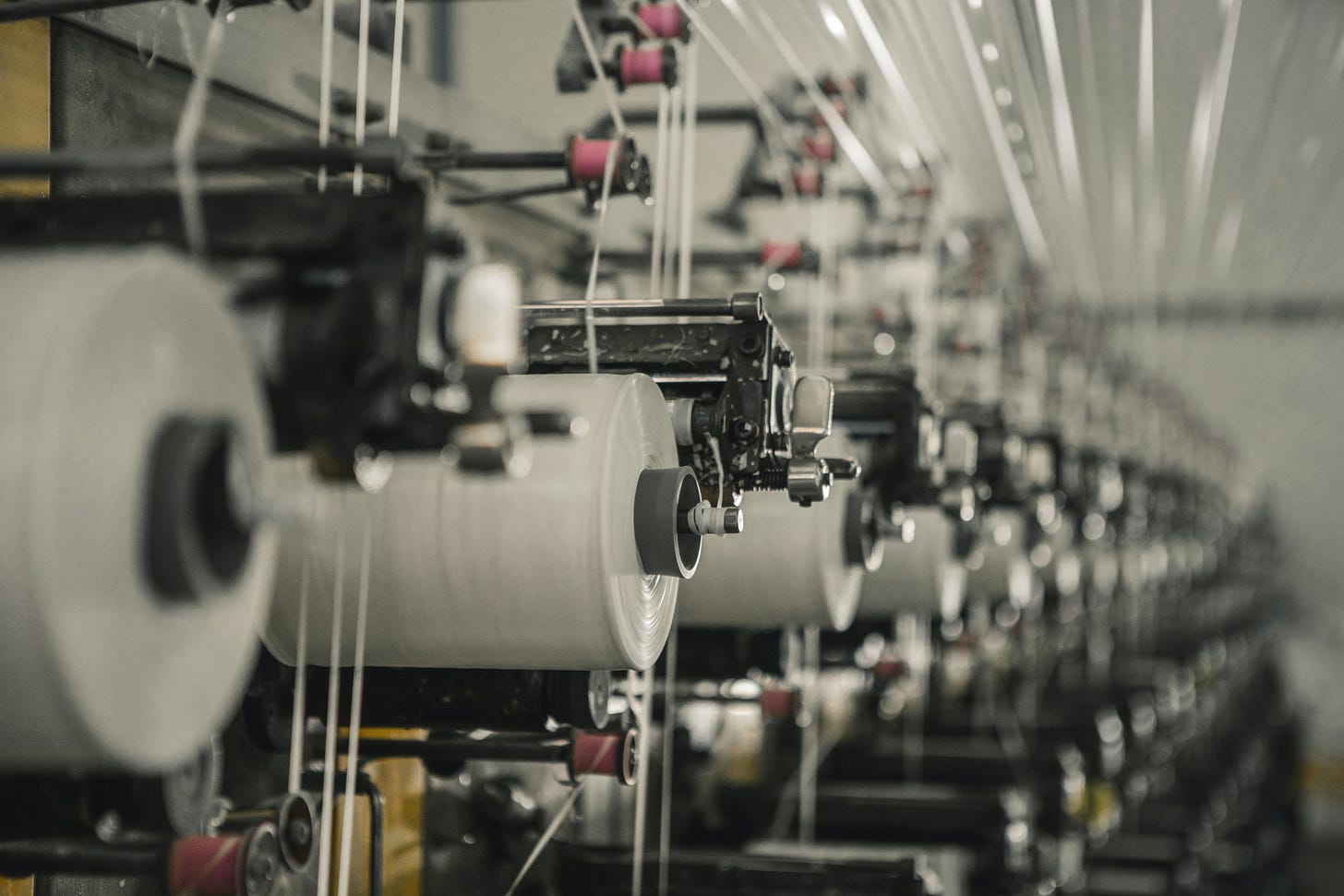
We’re pleased to announce that we led the $3.5 million seed round in Shelfmark, a Pittsburgh-based industrial AI company whose proprietary computer vision puts eyes on 100% of the production line for continuous-flow manufacturers, turning what it sees into intelligence those lines can act on.
On paper, watching a production line sounds simple: monitor the product, catch any flaws, and pull the bad stuff before it ships. In practice, on a continuous-flow line (i.e. the “rolled goods” world of industrial films, decorated apparel, webbing, and structured building components), the material moves past at up to 800 feet per minute, and the defects that matter can be as small as 100 microns, the width of a human hair.
No human eye catches those defects reliably, shift after shift, and even hawks have to blink sometimes. As a result, most manufacturers don’t even try to catch everything. Instead, they check a sample of what comes in, run the line, and cross their fingers. The shoddy material surfaces later, whether three steps into production or upon delivery to the customer, as scrapped runs, line stoppages, and disputes with suppliers over who is ultimately at fault. Worse, when something does get caught, the lesson evaporates. The evidence of what actually happened on the line sits scattered across cameras, sample logs, disconnected systems, and the memories of whoever happened to be working that shift. The same defect shows up again next month, and nobody can say why.
The tools that should have solved this pickle were never built for these manufacturers. Legacy machine-vision incumbents run rules-based systems engineered and priced for the largest mills, too brittle and too expensive for the mid-market converter. The newer wave of AI-native startups was architected for the opposite problem: discrete parts examined one at a time at a station, not material moving continuously across a web. Neither fits continuous flow, which is why, in one of the largest and oldest corners of American manufacturing, the state of the art is still a person standing at the line, staring as if hypnotized by the endless scroll.
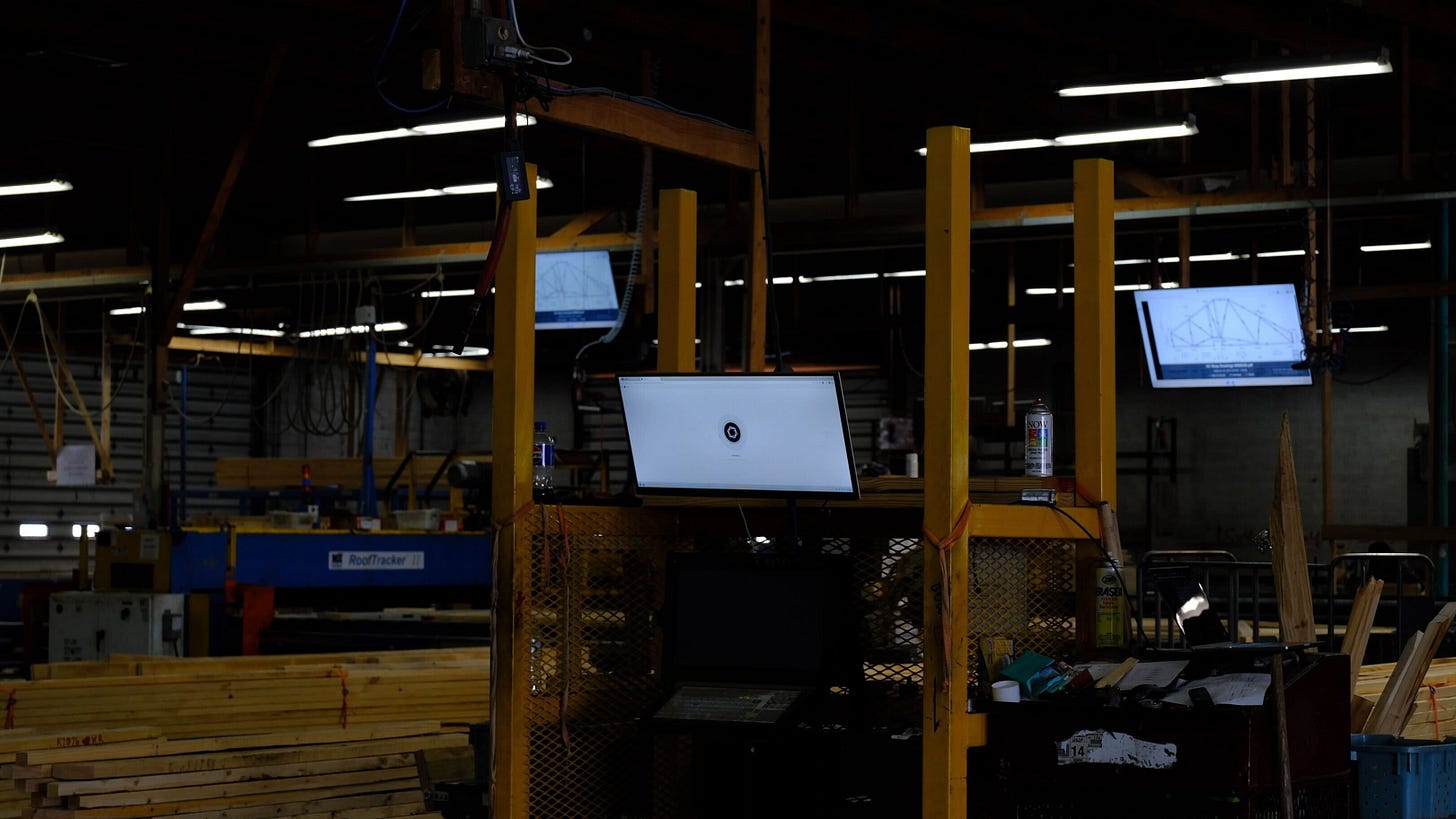
Shelfmark was built to change that. Its platform pairs deep-learning computer vision with specialized line-scan cameras and in-line IoT sensors to see 100% of product in real time, catching vanishingly tiny defects at full production speed with 99.5% accuracy. Then it does the part nobody else does: it connects every defect to the conditions that produced it — temperature, humidity, pressure, line speed — so the plant learns why the problem happened and how to stop it from happening again. In one deployment, Shelfmark traced a defect pattern to swings in temperature and humidity; the manufacturer installed humidity controls and cut its defect rate in half.
The whole thing is fully managed. Shelfmark builds, tunes, and maintains the hardware and the models, so a plant needs zero machine learning talent to get value on day one. Every run also produces a “roll map report card,” an objective digital record of exactly what happened across every inch of material.
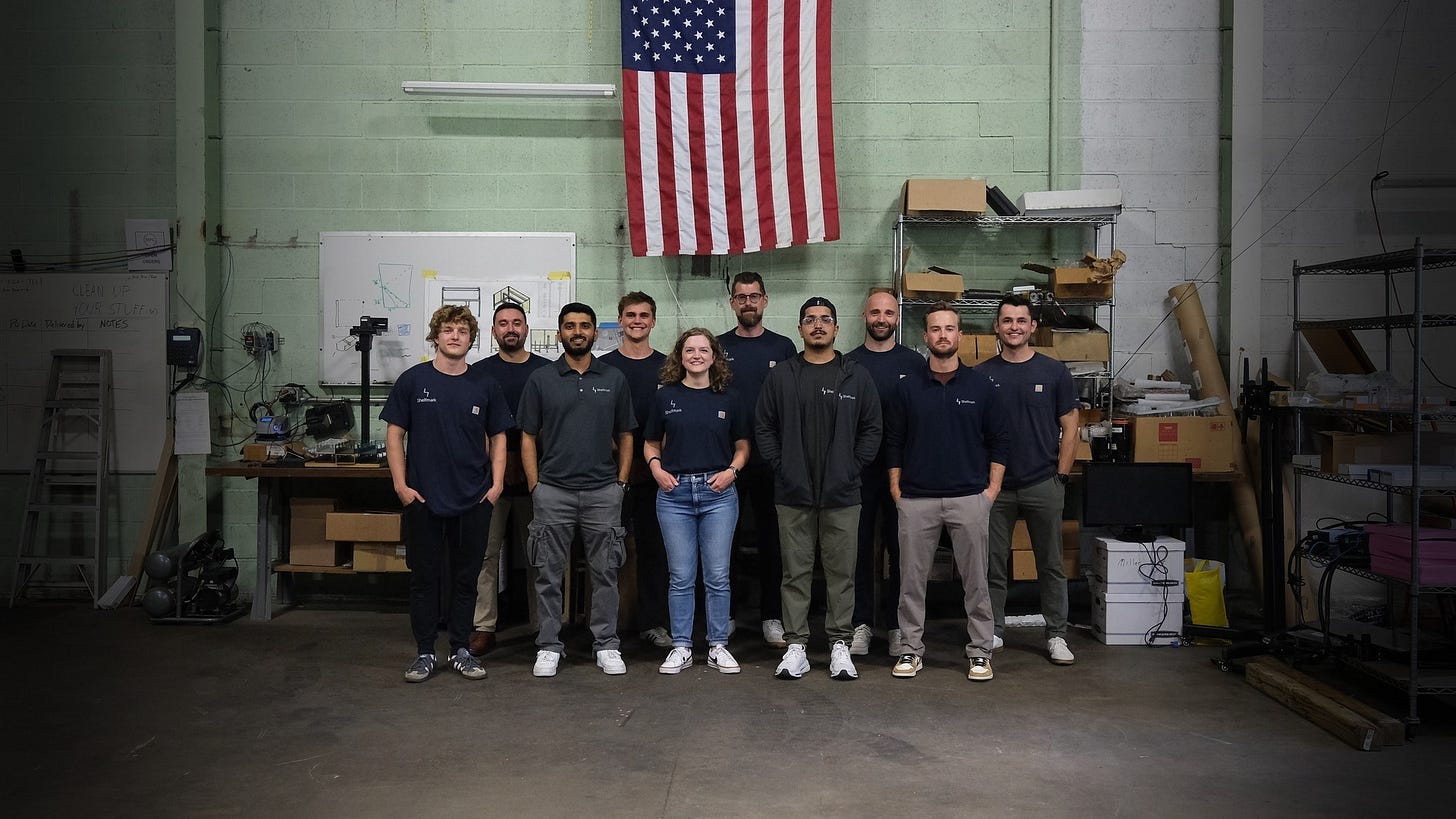
Shelfmark is the brainchild of two complementary cofounders:
Pat O’Donnell (Co-Founder & CEO) is a product-oriented operator who, before building Shelfmark, spent six months on factory floors doing customer discovery, including 4 a.m. ride-alongs on bread trucks and first shifts at a pottery factory, to learn these manufacturers’ problems firsthand.
Craig Markovitz (Co-Founder & Chairman) is a serial entrepreneur who previously founded Blue Belt Technologies, a Carnegie Mellon spinout that was acquired by Smith & Nephew. He serves as a Professor of Entrepreneurship at CMU’s Tepper School, giving Shelfmark a direct line to Carnegie Mellon’s machine-learning talent.
Why We Invested
Shelfmark runs a playbook we’ve seen produce some of the best industrial technology businesses of the last decade. Samsara and Augury both won by owning the full stack and turning one-time capital purchases into recurring relationships in a process legacy automation never digitized. The market here is structural and greenfield: because neither the incumbents nor the discrete-part startups were built for continuous flow, most of these manufacturers have never automated any of it.
Catching defects is a compelling wedge that tees up even more compelling opportunities downstream. Being the system that sees 100% of what happens on a line is the most valuable position in the plant. Once Shelfmark holds it, the company is the obvious answer to every question that follows: what should this line be doing differently, and eventually, can the line adjust itself? That path runs from detection to explanation to guided corrective action to closed-loop control, and each step compounds on the data the last one generated.
In the near-term, Shelfmark improves both sides of the income statement at once by cutting defects and material waste while also reducing manual inspection labor and letting lines run faster and longer. Shelfmark has cut waste by up to 90%, halved inspection labor costs, and delivered up to 7x the return of the manual approach, which makes for a refreshingly straightforward sale in an environment where every manufacturer is hunting for efficiency. It shows in the numbers: a 90% pilot conversion rate across four initial markets.
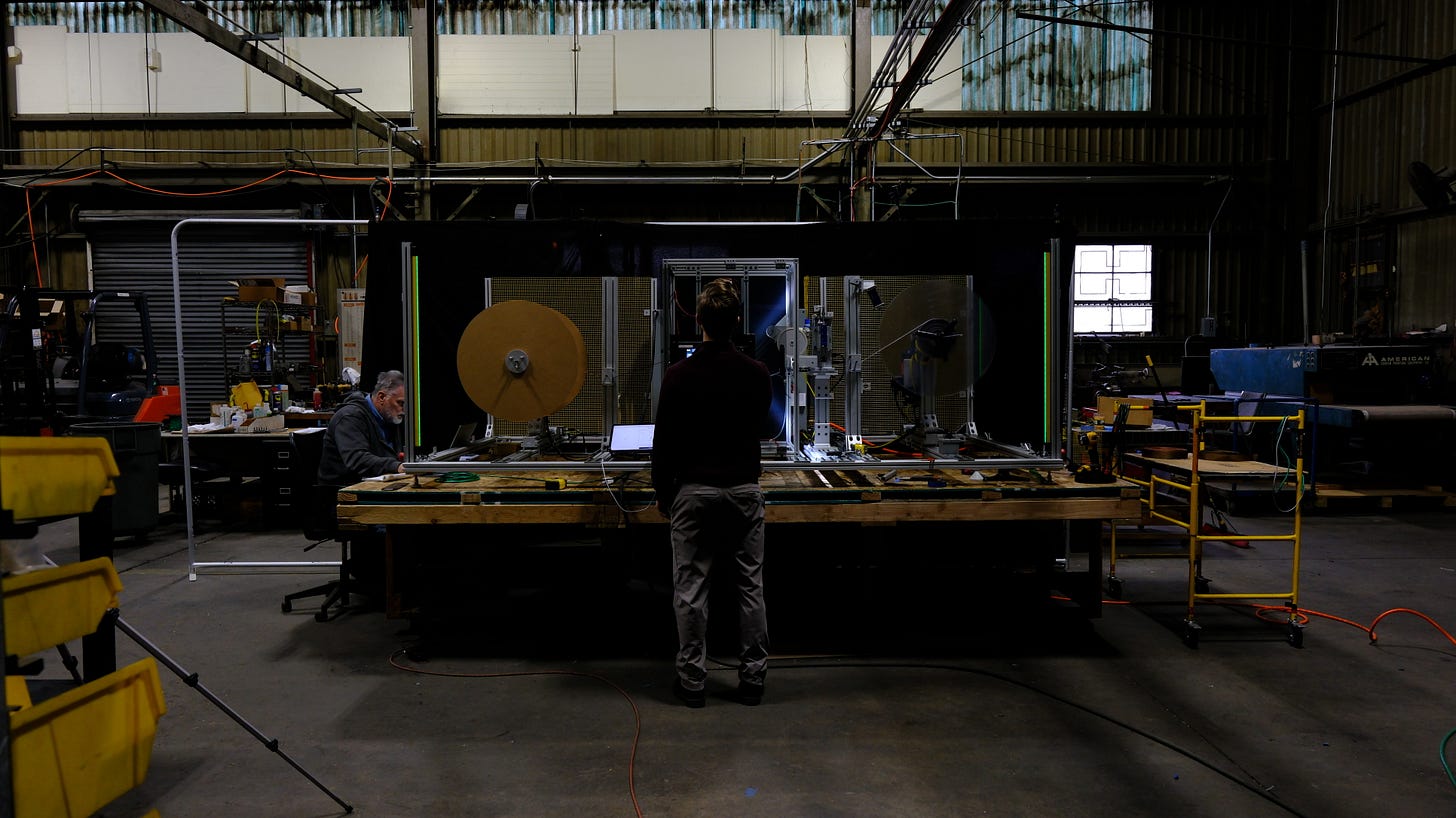
Shelfmark’s hardware sits physically on the line, where no software-only competitor can rip it out, and every deployment generates labeled, vertical-specific training data that makes the next customer faster and cheaper to onboard. Each roll map report card also doubles as a shared standard customers can hand to their own suppliers and buyers, which instigates an organic referral dynamic that’s rare in industrial software, where adoption often stays siloed inside a single plant. And the product tends to become infrastructure quickly, landing on a single line and expanding across lines and facilities.
The continuous-flow market is a multibillion-dollar opportunity, fragmented and underserved by software built before modern deep learning was viable. In Pat and Craig, Shelfmark pairs an operator who has walked the factory floor with a builder who has scaled and sold a hardware-enabled company before, and the team has made remarkable progress thus far on minimal funding. We couldn’t be more excited to help them build the intelligence layer for continuous-flow manufacturing.
We’re proud to partner with our co-investors at Grand Ventures, Hyde Park Angels, Argon Ventures, and Cultivation Capital in backing this exemplary team.
Share: