Armory Square Ventures
Interviews
·
Lessons from Liftoff
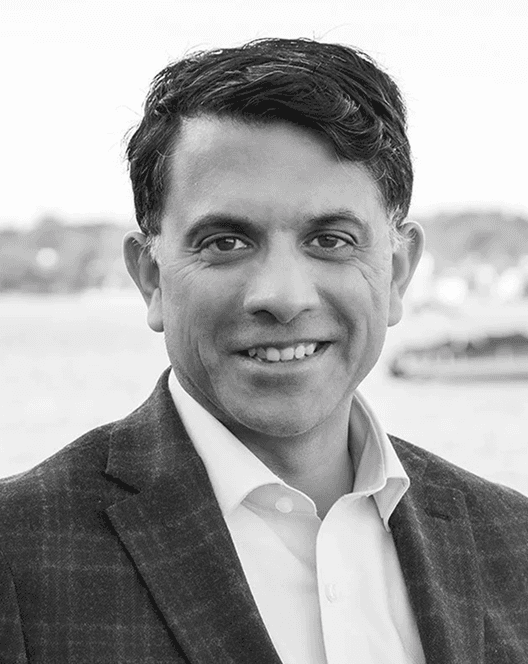
This past month, we had the pleasure of hosting Tejpaul Bhatia for a fireside chat in midtown Manhattan as part of our Cereal Founder Breakfast series. Below is an abridged version of that conversation.

Somak Chattopadhyay: You’ve worked in everything from ESPN to cloud computing at Google. How did you end up in Space Tech?
Tejpaul Bhatia: It actually goes back to a vivid memory from when I was three years old. My immigrant parents drove us from New York to Florida in an old wood-paneled station wagon. We stopped at the Kennedy Space Center, and I remember asking my dad what was happening in this gigantic building. He said, “They build spaceships in there.” In that moment, my mind, my heart, and my soul exploded.
I knew that was all I was going to think about for the rest of my life. I later learned that not everybody thinks like that. I assumed everyone was always thinking about space. Turns out it’s about a third of people.
SC: You spent four and a half years at Axiom Space. What was that transition like?
TB: It was about doing what the world said was impossible. The space industry can feel stuck in 1969, bureaucratic and convinced that things “must” be a certain way. I went in with a “first principles” mindset. At Axiom, we were building the commercial replacement for the International Space Station (ISS) because the current one is aging out.
SC: You’ve mentioned that the aerospace industry “doesn’t like money.” How did you change their business model?
TB: Rocket scientists often think money is “icky,” but money is just a measurement of value. When I joined as Chief Revenue Officer, the strategy was to sell seats to billionaires. I did the math and realized that between net worth requirements, the desire to go, and board approvals, there were only about 12 people in the world who could actually buy those seats.
I shifted the focus to countries. For a nation, while politically complicated to get approved, the price actually is a drop in the bucket. We ended up closing massive deals with Saudi Arabia and the UAE, even sending the first female Saudi astronaut to space.
SC: What is the biggest lesson you took from your time at Google and applied to space?
TB: At Google, I saw what happens when you have unlimited resources of bandwidth and compute. It changes how you think. In my early career at ESPN, I thought I literally had to “invent bandwidth” by physically installing servers in Buffalo to stream the World Figure Skating Championships. Now, we have abundant compute. I wanted to bring that commercial speed and “abundant” mindset to an industry that was used to 10-year sales cycles.
SC: You’ve also founded multiple startups.
TB: Three investor-backed companies. Two sold, one shut down. And honestly, for a long time I didn’t even understand what venture capital really was. I didn’t fully understand stock options until ten years in.
What I did understand was that startups are brutal. Co-founder conflict nearly broke friendships. It’s an incredibly intense environment. It’s a great equalizer. I don’t care what privilege you came from. Startups will punch you in the face fast.
SC: You eventually stepped away from founding. Why?
TB: When my son was born, I decided I didn’t want to be a founder anymore. I thought startups were what made me abnormal. Turns out I’m just abnormal. I love working, I go all-in.
I joined Citi Ventures. First time I’d worked for someone in ten years. I sat in a cubicle in Long Island City at a 250-year-old company with 250,000 employees and started feeling guilty. Days would go by and I felt like I hadn’t done anything.
So I checked my internet logs. Every morning I’d open the New York Times, click an article about Mars or the ISS, and then disappear into Wikipedia for hours. That’s when I realized: this isn’t random.
I went to my managing director and said, “Let me be the space guy for Citi.” She said, “We don’t need a space guy.” I said, “Great, so we have a deal.”
SC: And that ultimately led you to Axiom.
TB: I made my first angel investment in Axiom Space. While at Citi, Google hired me to build their startup cloud credits program. During COVID, Axiom started calling me for go-to-market advice.
At some point they told me, “We have four committed missions to the International Space Station and we need to get customers.”
I told them, “You need a go to market strategy.”
SC: So you created that strategy?
TB: As I noted, I realized quickly that the real market was countries. Everyone told me government sales cycles take ten years. I had ten weeks. We had bills due to SpaceX with late fee penalties.
We closed Saudi Arabia and the UAE. Then Italy. Then Turkiye. Many deals happened because of “intentional serendipity” that typical protocol doesn’t support. It’s the magic of customer-centric deal making.
SC: You mentioned that the Turkiye’s earthquake became a major turning point.
TB: After Turkiye signed, the earthquake hit. Fifty thousand people died. Withdrawing from the missions would have been an expected response. I strongly believed that their people needed hope, especially now, and that if I got fired for saying that, I was willing to accept it.
They stayed in the mission. Even if they hadn’t, that conversation mattered.
SC: Have you ever considered leaving earth yourself?
TB: There was a moment where I could have. I knew I could figure out a way to finance it. My wife told me to go. My son said okay, though he likes sports more than space. But I realized my purpose wasn’t to go. It was to get as many people to go as possible. Commercially, I’ve sent quite a few people into orbit. I don’t regret it.
SC: You’ve been called “Trillion Dollar Tej” by folks in your industry. Where did that nickname come from?
TB: Because I refuse to believe the space industry should take until 2040 to become a trillion-dollar economy. If companies like Facebook can go from IPO to a trillion-dollar market cap in less than a decade, why can’t space? The International Space Station is the only place on (or off) Earth where geopolitical conflicts like the Ukraine-Russia war don’t stop cooperation. That level of diplomacy and science is worth far more than the world currently recognizes.
Audience Q: Space feels less like a realm of discovery now and more like a chessboard for geopolitics. Do people still marvel at it?
TB: Every modern war is already fought in space, with GPS, satellites, cyber. Countries blow up satellites just to prove they can. That’s reality. But exploration still exists. It’s always explorers, then pioneers, then settlers. Low Earth orbit isn’t exploration anymore. The Moon and Mars still are. Both things are true at once.
SC: Last question. What have you learned about hiring talent?
TB: I track everything. My hiring success rate is about 25 percent. I’m wrong most of the time. The mistakes come from hiring too fast, settling for “best of the candidates,” and ignoring your gut. I’m intense. My expectations are high. I don’t tolerate excuses. That’s not for everyone, but when the fit is right, it works.
Share: